AUTO RARA · DESIGN CAPABILITY
Before the first costly move, see where your car could go
More freedom to imagine. More clarity before commitment. The craft still happens in the hands of real people.
AUTO RARA STUDIO
Explore the possibilities. See your next move.
From subtle exterior changes to a developed concept, Auto RARA Studio helps you compare paint, trim and design directions around your own car. Physical assessment and controlled photographs ground the work; research, AI-assisted visuals and specialist review bring the options into focus.
The chosen direction returns to the workshop for physical sampling, measurement and engineering development before work is commissioned.
One E-type. A world of possibilities.
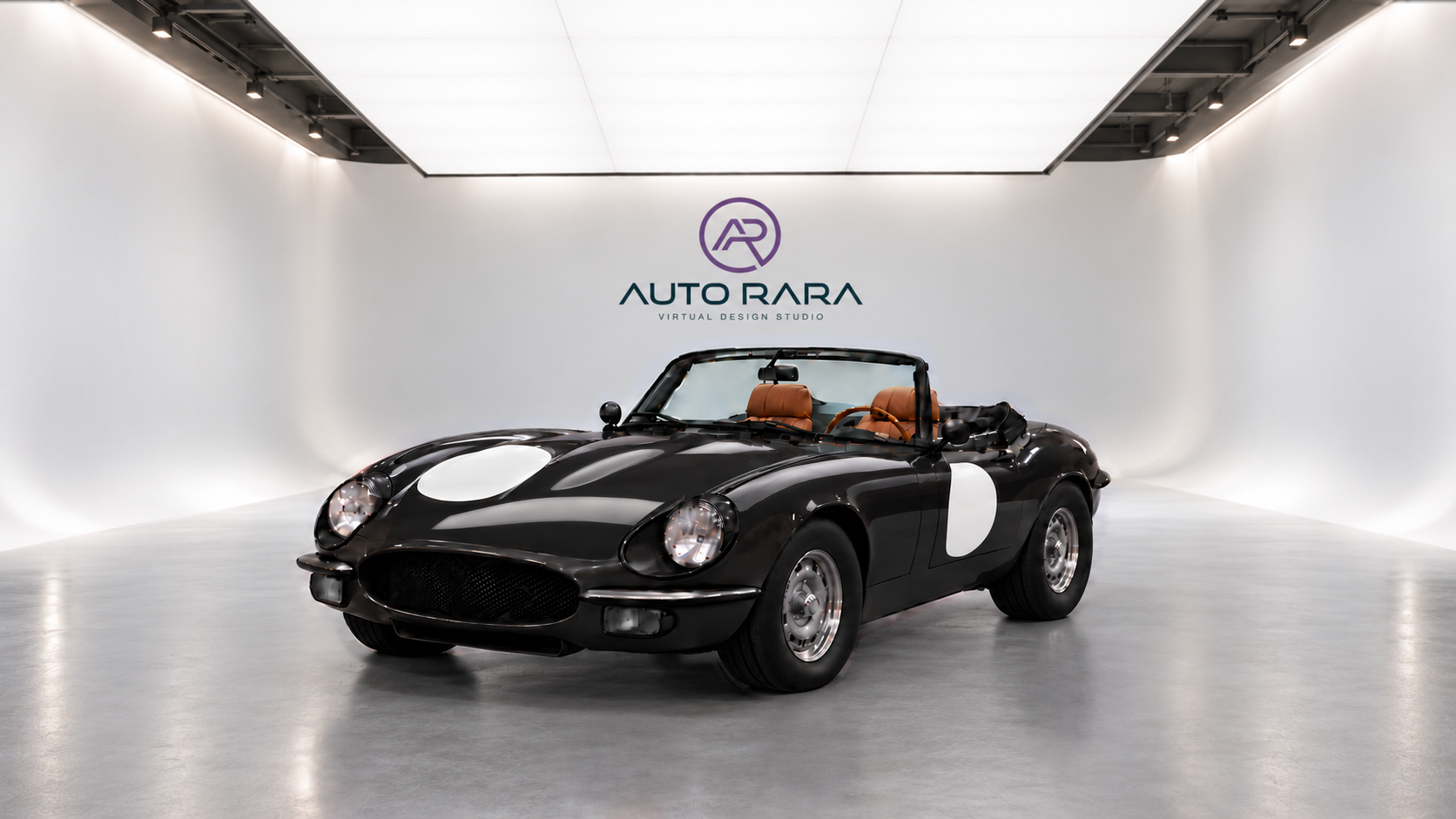
The brief: explore how an E-type could take on a café-racer character while keeping its recognisable form. Start with the original-specification visual reference, compare individual choices, then develop a coherent direction.
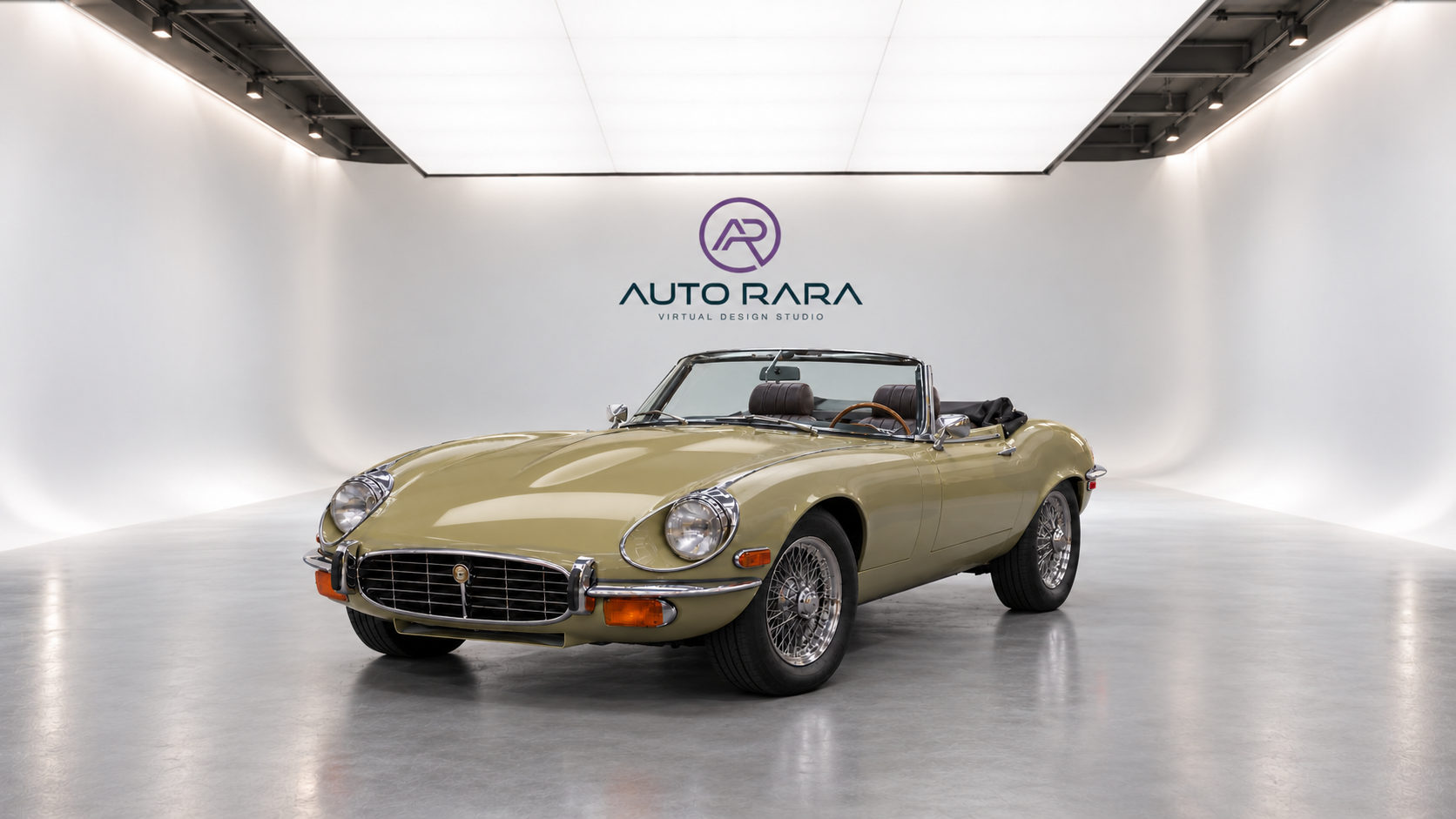
01 · Original-specification visual reference
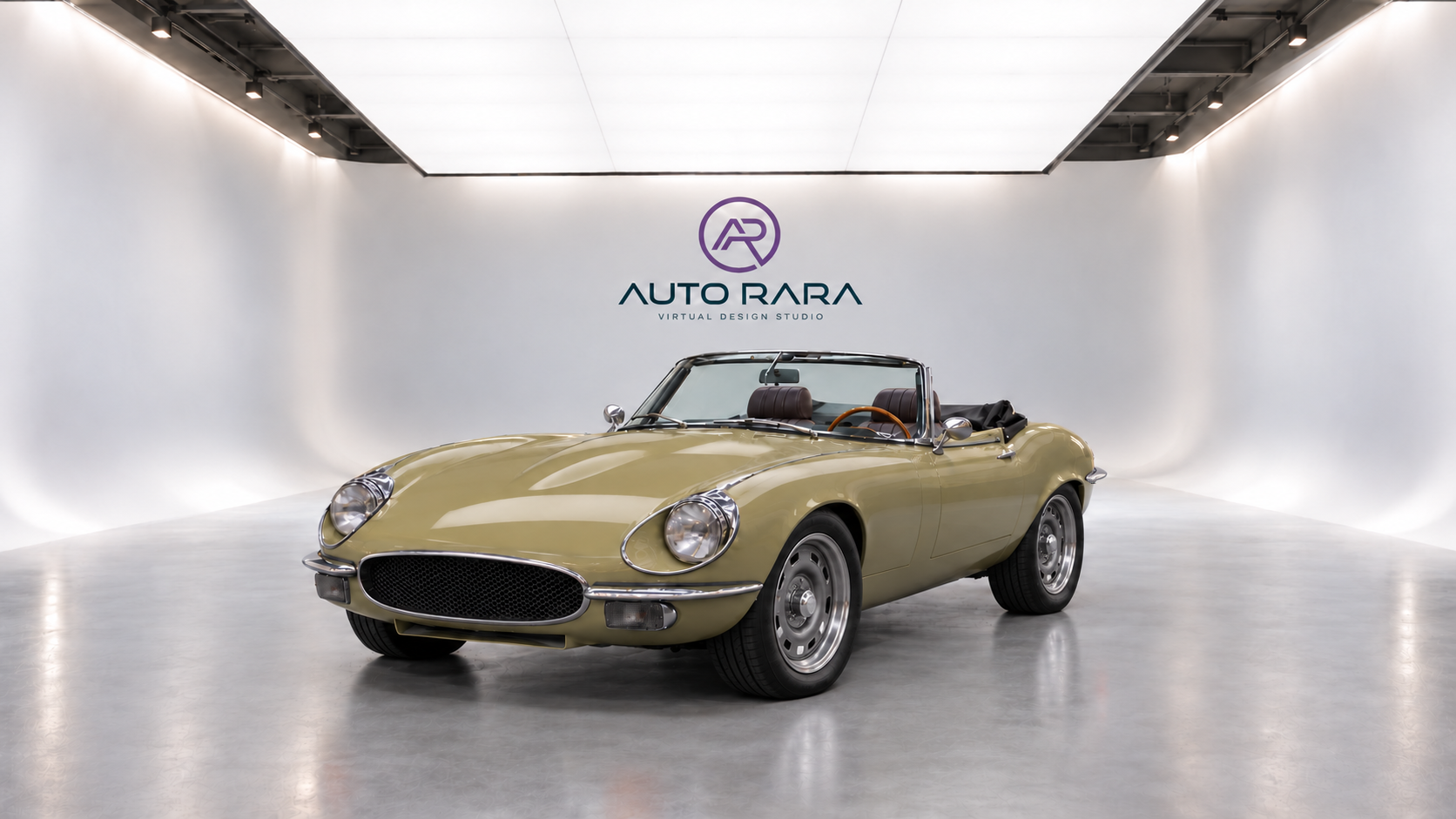
02 · Light modifications: wheels, grille and lights
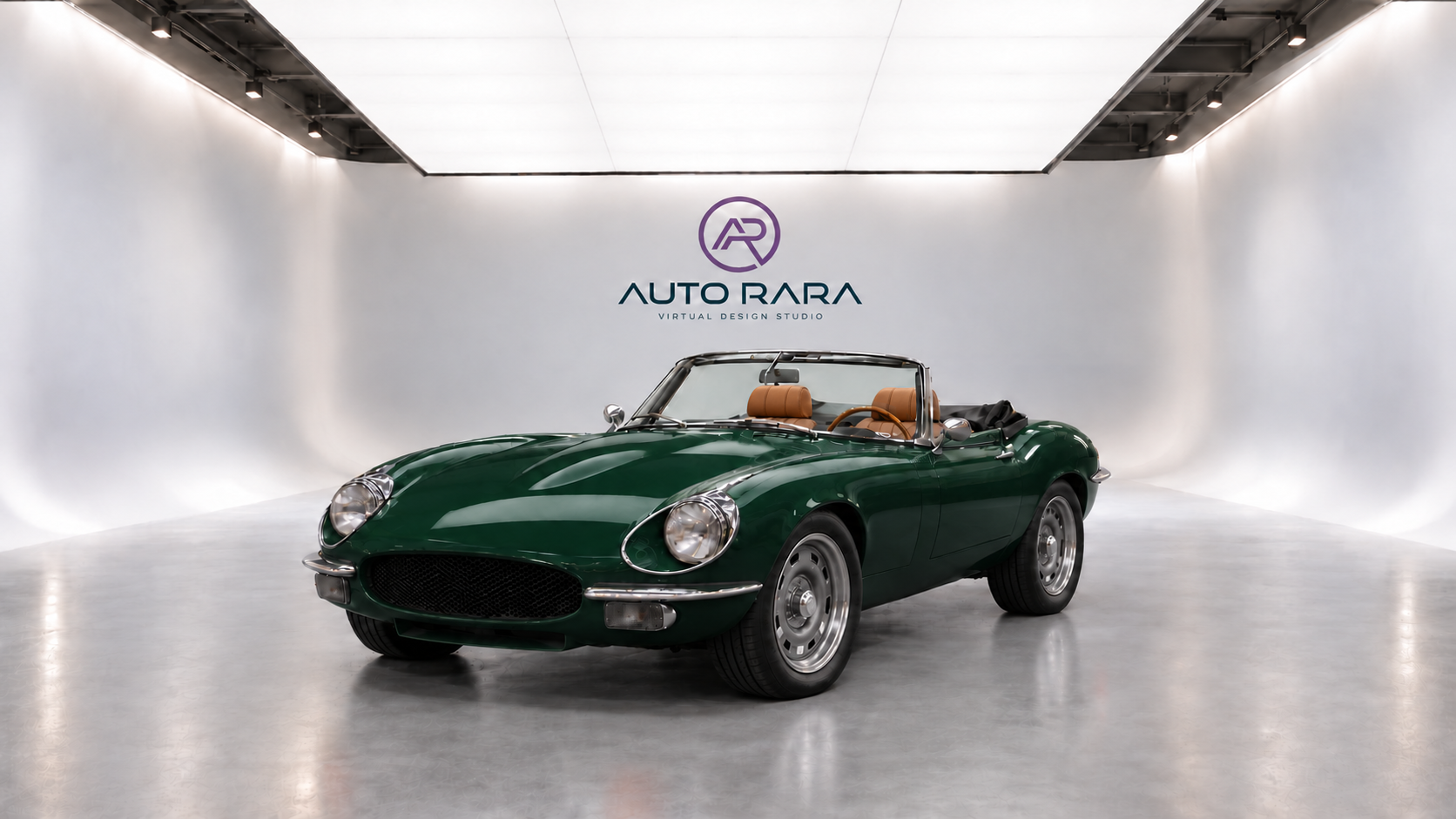
03 · Paint option: racing green
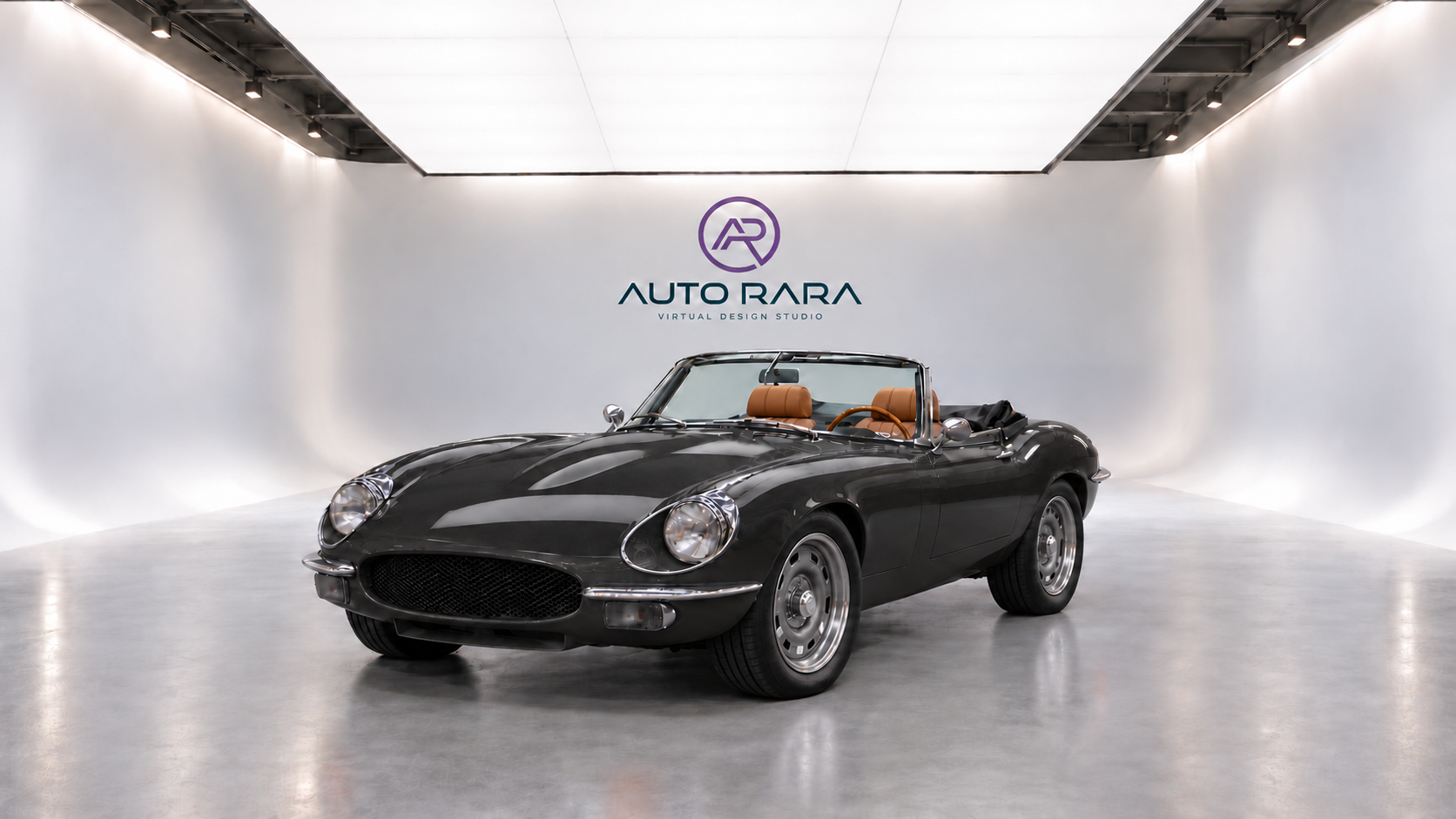
03 · Paint option: Black Nickel
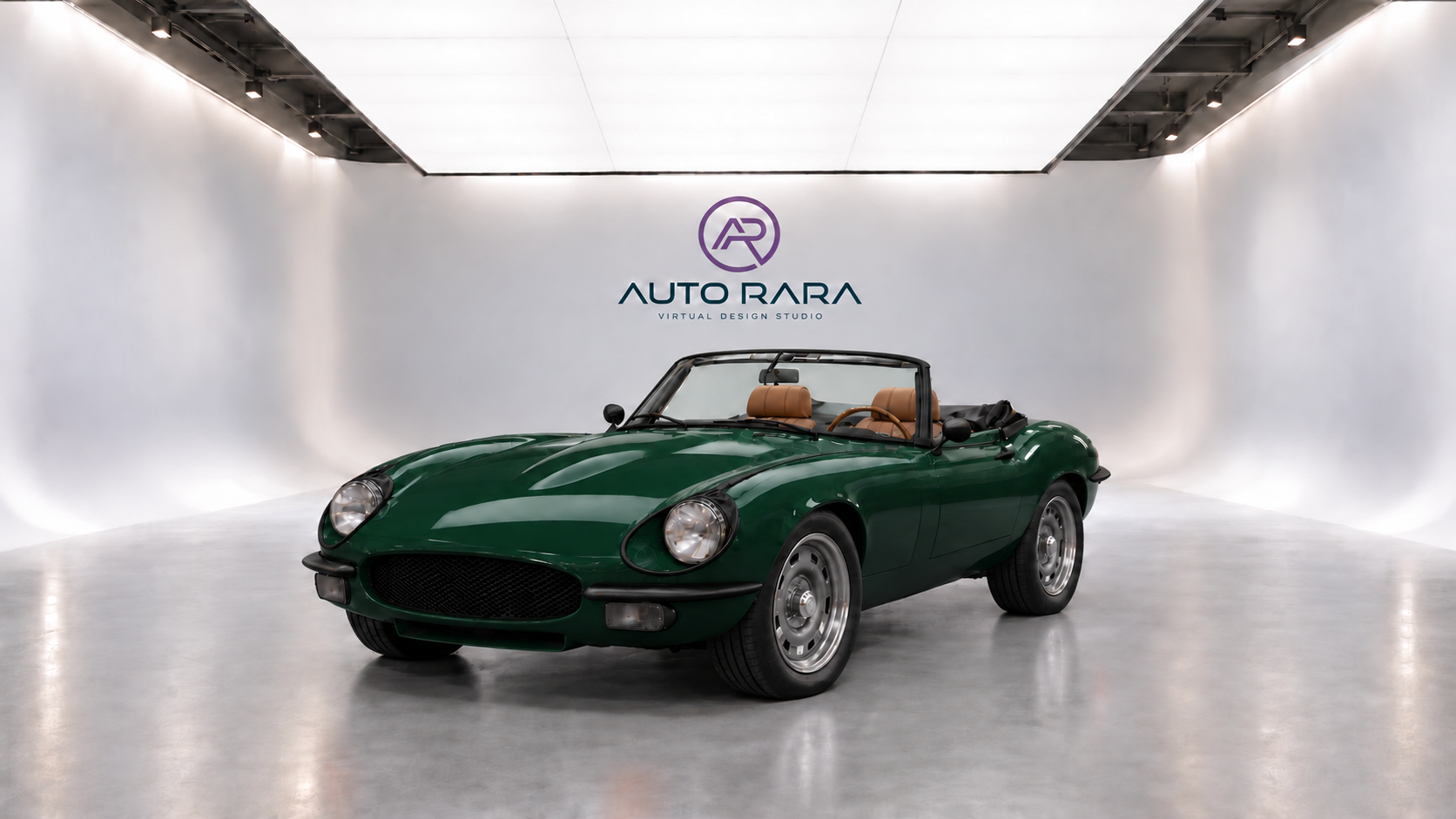
04 · Exterior trim option: black
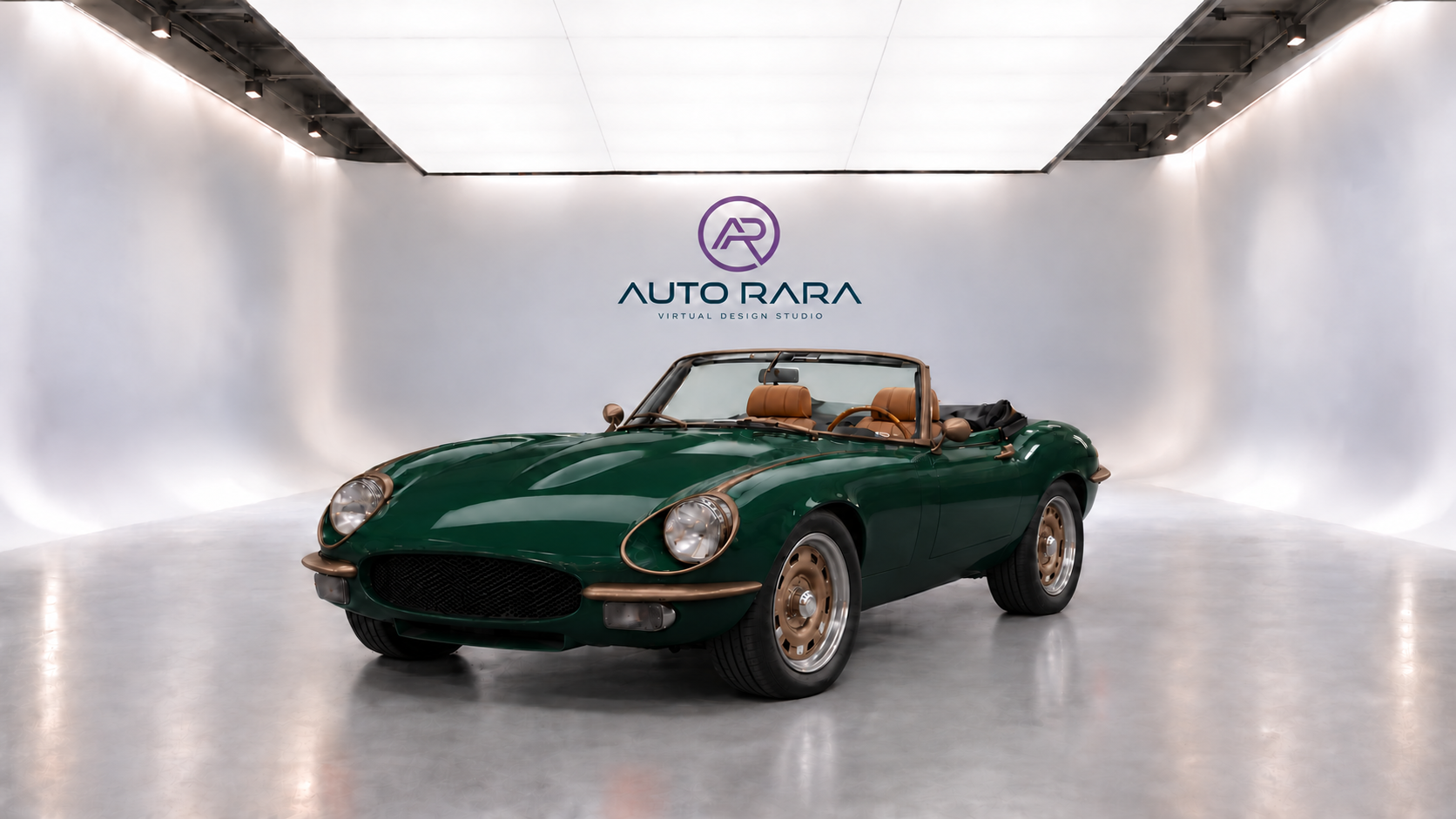
04 · Exterior trim option: bronze
05 · Developed café-racer concept
These are historical design studies, not photographs of completed work. Colour and finish remain subject to physical sampling; the images do not establish engineering fitment.
Talk to us about your carE-TYPE CASE STUDY · RESEARCH
Know what makes the car matter
The E-type study draws on model history, original architecture and period road tests. That research gives each design question context: what should remain recognisable, what could change and what needs checking on the car.
Architecture01
Finding. Series 3 combined the new 5.3-litre V12 with evolved E-type structure; OTS and 2+2 shared the 105-inch wheelbase. Body, market and date still matter.
Source. Jaguar Cars, Series 3 E Type, March 1971, p.8; JDHT Research Guide 001F, Issue 3, pp.1–2; canonical dossier pp.2–6, V01/V04.
Design question. Which original proportions and identifying relationships should stay legible, and which details depend on body, market and date?
Character02
Finding. Period road tests of the cars reviewed described smooth, quiet and flexible performance alongside limitations in controls, steering feel and packaging. They do not describe every donor.
Source. Motor Sport, “Driving the V12 Jaguar”, April 1971 (https://www.motorsportmagazine.com/archive/article/april-1971/64/driving-the-v12-jaguar/); “On the Road with the V12 E-type Jaguar”, January 1972 (https://www.motorsportmagazine.com/archive/article/january-1972/36/on-the-road-with-the-v12-e-type-jaguar/); canonical dossier p.11, V10/V11.
Design question. How should refinement and analogue involvement inform the design without reducing V12 identity to noise or treating the exhaust concept as a research conclusion?
Dimensions03
Finding. Published Jaguar dimensions are approximate reference values and differ between publications; they are not measurements of the project car.
Source. Jaguar Cars/British Leyland UK 1973 dimensional drawing scans 23–24; canonical dossier pp.5–6 and 13, V03.
Design question. Which dimensions support early proportion studies, and which interfaces and clearances require a donor survey?
E-TYPE CASE STUDY · TECHNICAL DEVELOPMENT
From visual intent to technical questions
This preliminary exhaust study explores routing, clearances, heat and service access. It shows how the design conversation can move beneath the bodywork. Physical measurement, engineering review and fitment validation are still required; the drawing is not released for fabrication.
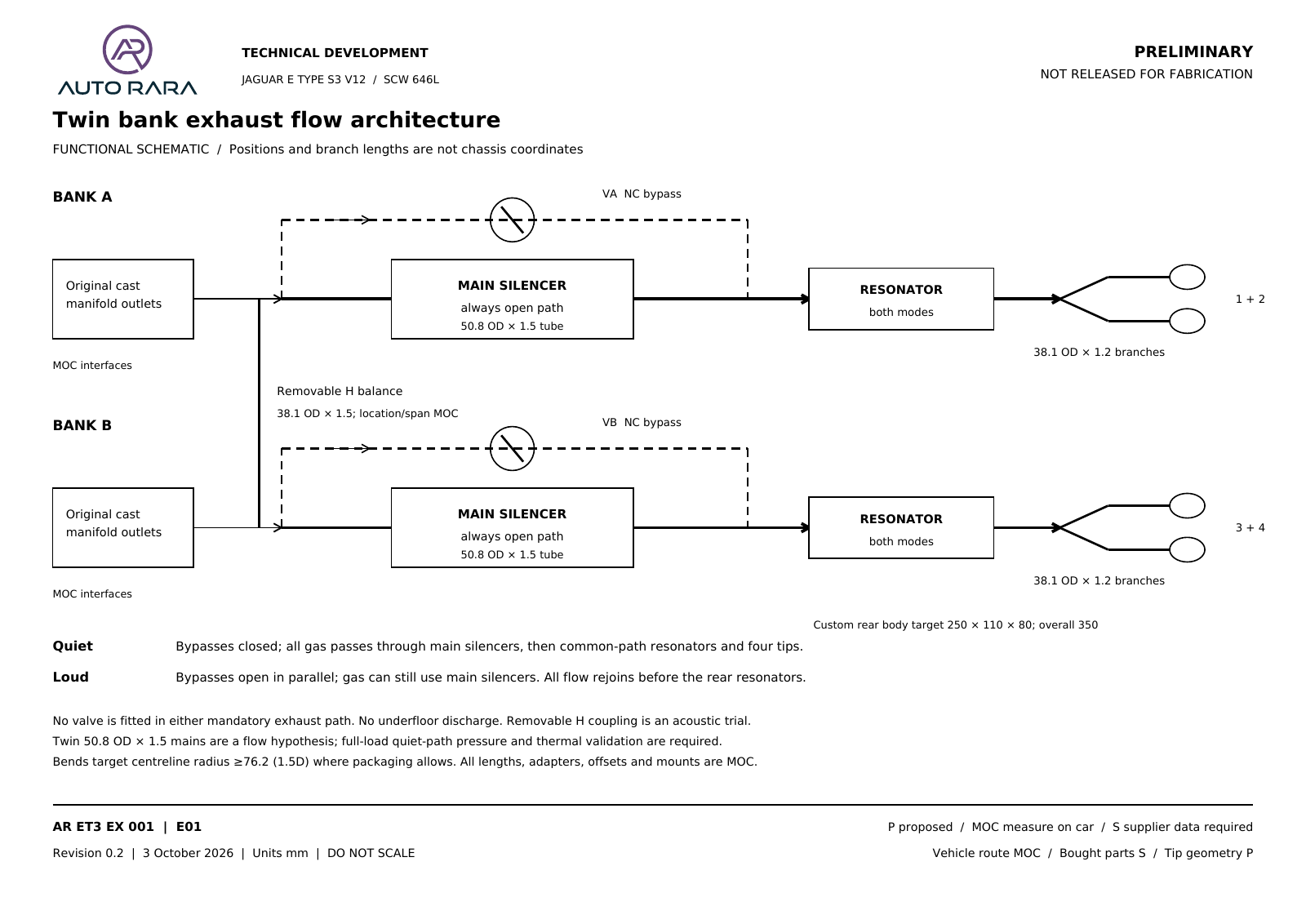
Donor survey and fitment validation remain outstanding. E01–E06 are not released for fabrication.
What the drawing must resolve
- Dimensions
- Published references support early proportion studies only; project interfaces and clearances require a donor-car survey.
- Materials
- Proposed materials remain subject to forming and heat-management review.
- Interfaces
- Mounting, clearances, valve control and neighbouring systems must be checked on the vehicle.
- Revision gap
- Package v0.2 predates rear v5. Neither source is represented as generating or reconciling the other.
Owner value
Explore widely. Commit deliberately.
Classic-car work carries consequence. A colour can transform the personality of a car. A restoration decision can preserve irreplaceable evidence or erase it. A restomod idea can sharpen the driving experience or overwhelm the character that made the car matter.
The studio creates room to look, compare and ask better questions before costly physical work begins. It cannot guarantee a saving, but it can expose alternatives and uncertainties earlier, when changing direction is still an exploration rather than rework.
Derby demonstration lounge
See the thinking. Meet the craft in Derby.
Auto RARA's Derby hub at Great Northern Classics is the location of the Classic Car Trim and Demo Lounge. It gives owners a place to experience the studio proposition and connect virtual exploration with materials, workmanship and the real decisions behind a build.
Great Northern Classics, 274–278 Osmaston Road, Derby DE24 8AE
Frequently asked questions
Frequently asked questions
Can the Studio work with my own car?
That is where the conversation begins. The Studio is intended to explore possibilities around a real car, not an anonymous approximation of one. Auto RARA first needs to understand the car itself: its condition, history, character and the owner’s ambitions for it. A physical assessment and controlled reference photography give the team a grounded starting point for visual exploration. Suitability and the useful scope of a Studio exercise depend on the individual car and what the owner wants to achieve, so those points are established before a direction is proposed.
What can we explore in the Studio?
The Studio creates room to examine different futures for a car before costly physical work begins. That might include paint direction, restoration character, a sympathetic restomod approach, selected visual details or the relationship between several ideas. The right questions will vary from car to car. Controlled imagery helps keep comparisons visually consistent, while heritage and car-culture research gives each route a reason to exist. Rendered colour and detail remain design guidance rather than a guarantee of an exact real-world finish, but they can make a difficult choice far more tangible.
What if I want something special, but do not yet know exactly what?
You do not need to arrive with a finished brief. Many owners begin with a feeling, a reference, a frustration or a sense that the car could become more distinctly theirs. Auto RARA can help develop that starting point through conversation, assessment, research and a small number of meaningful alternatives. The aim is to reveal directions worth discussing, not to bury the owner under endless variations. The technology expands the field of view; experienced people help give it shape; the owner decides what feels right.
How does the process start, and why does assessment come first?
It starts in the real world, with the car. Physical assessment helps establish what Auto RARA is looking at before any virtual exploration begins. Controlled photographs are then made to provide stable references for proportion, viewpoints and background consistency in the Studio. They support visual fidelity, but they are not a substitute for engineering measurement or a technical inspection. Beginning this way keeps the creative work connected to the actual car and gives every later conversation a more credible foundation.
Can I compare different ideas before choosing one?
Yes. Comparison is one of the Studio’s central strengths. Alternative directions can be explored against a consistent visual starting point, making differences in character easier to see and discuss. Rather than committing immediately to paint, trim, restoration decisions or a broader restomod direction, the owner can consider how distinct approaches change the car as a whole. The useful number and scope of alternatives would be agreed for the project; the purpose is a clearer decision, not unlimited iteration for its own sake.
Does AI decide what happens to the car?
No. AI helps the team explore and communicate possibilities at a speed and breadth that would previously have been difficult, but it does not own the brief, the taste or the final decision. Auto RARA brings the assessment, research, creative judgment and workshop experience. The owner brings the connection to the car and chooses the direction. Every meaningful choice remains human, and every proposal must still be tested against the real car before work proceeds.
What happens when I choose a direction? Can Auto RARA carry out the work?
A selected direction becomes the basis for a practical workshop conversation, not an automatic instruction to build. Auto RARA can review what the idea would involve, develop the relevant detail and discuss whether and how the work could be undertaken. Some elements may need further technical study, measurement, sourcing or specialist input before a scope can be agreed. The intention is a continuous journey from a real car, through informed exploration, and back into real-world craft, with feasibility confirmed before commitment.
When will we discuss cost and timing?
Meaningful cost and timing discussions follow a clear understanding of the car, the chosen direction and the work that direction may require. Condition, scope, parts, specialist input and technical development can all affect the answer. Auto RARA can then discuss the relevant next-stage scope with the owner before any commitment, with a clearer basis for the likely investment and schedule. Current pricing, timing and workshop availability must be confirmed for the individual project.
Can I visit the demonstration lounge in Derby?
The Studio demonstration lounge is at Great Northern Classics in Derby, giving the service a physical setting as well as a virtual one. A visit would need to be arranged directly with Auto RARA and is subject to current availability. The team can confirm what can be demonstrated before you travel. It is an opportunity to understand how assessment, controlled photography, research, visual exploration and workshop thinking connect around an owner’s car.
Next step
Bring us the car you have and the possibilities you cannot stop thinking about
We will start in the real world, open the field in the virtual studio and bring the chosen direction back to the people who know how to make it work.