


Mechanical assessment
These are the things I found when doing a mechanical inspection.
Starting in the engine bay I noticed that the screen wash reservoir and the battery are both insecure, the power steering reservoir has a slight leak and the steering column universal joint has slight play.
Once I had the car up in the air I found that the front wheel bearings need adjusting, the rear right brake is binding, the diff pinion bearing is noisy, front drop link bushes are perished and split. Both of the front inner arch splash guards are damaged and loose, the front left bump stop is damaged, the front universal joint in the prop shaft has a small amount of play, the gearbox mount is perished and there's a heavy oil leak coming from both the engine and gearbox.


No items found.
Exterior strip down
Strip down of all external panels & components has now began. Each component and their corresponding clips & hardware will be removed, catalogued & assessed to determine what action is required. Work has started with removal of the front & rear external lighting. The headlamps, front repeaters & fog lamps, with trims, were first to be removed. The rear lamp units & their backing plates were then unbolted & catalogued.


No items found.
Fabrication/underside/ lh sill chassis and jacking point
All striped back of old underseal rust treatment applied where necessary primed and rubber guarded to help prevent any further corrosion


No items found.
Fabrication/chassis/wing rail
New metalwork fully welded in place and dressed rust treatment applied to the rest of the area to help prevent any further corrosion


No items found.
Seats
I have stripped the seats down ready for restoration work and repairs can now start.


No items found.
Gaitors
The gearstick and handbrake gaitors have both been retrimmed.The gearstick gaitor has been made 1 inch taller than the old one to allow for a wider range of movement.


No items found.
Coupé rear-quarter and structural metalwork completed
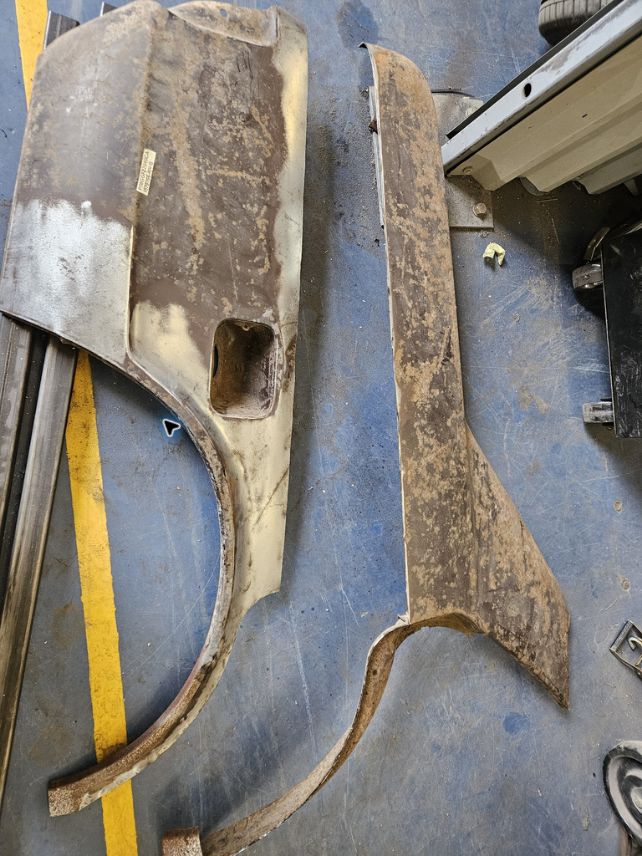
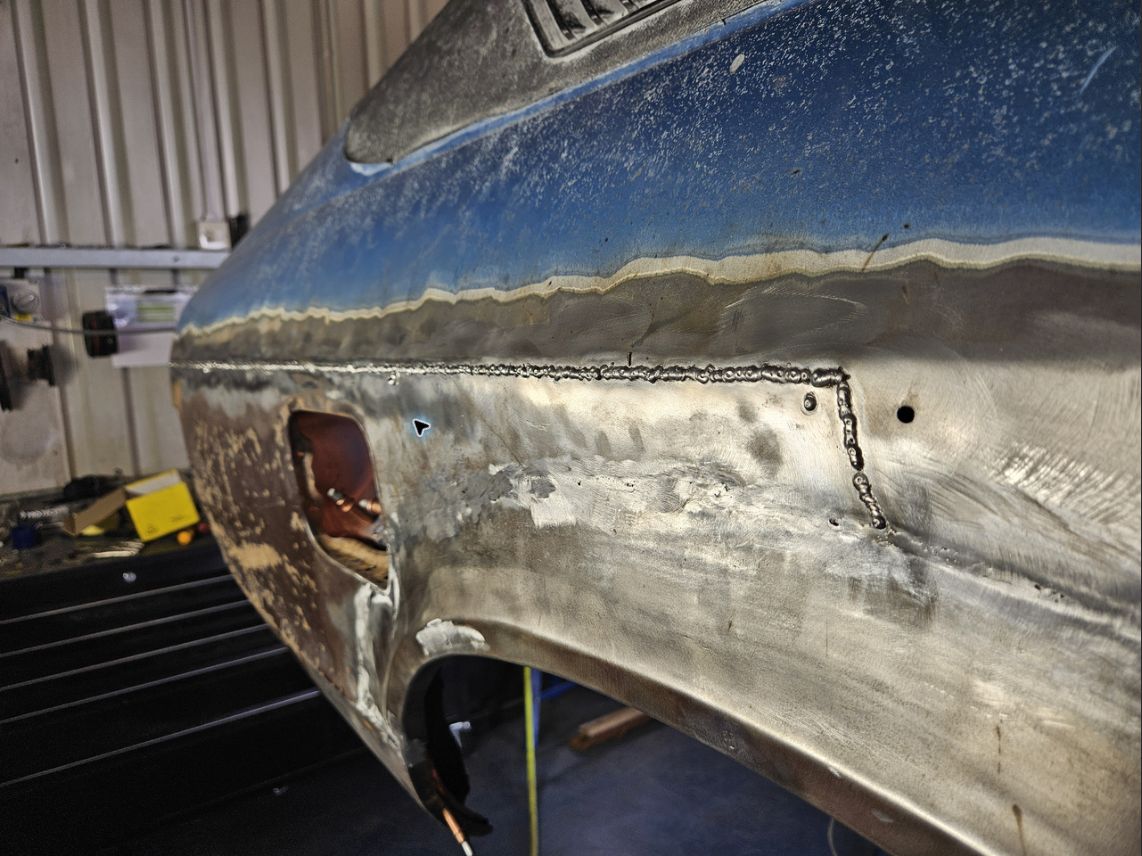
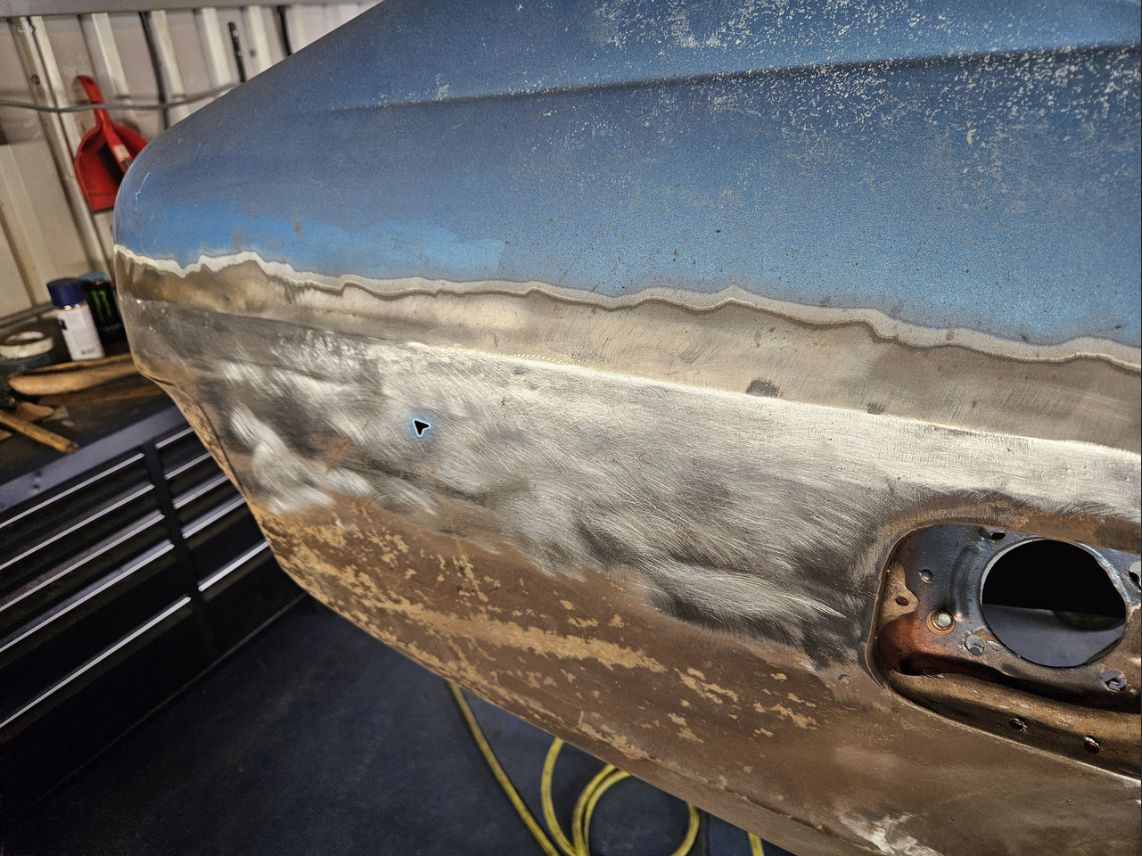
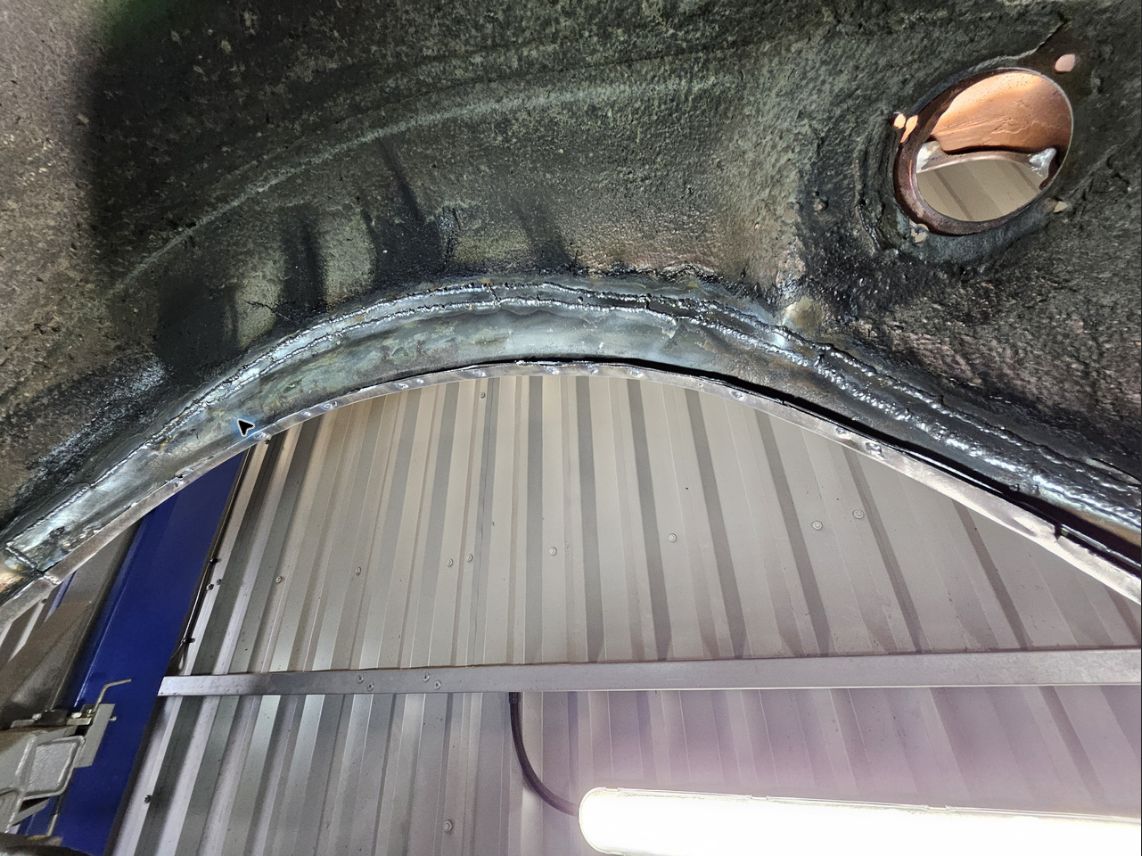
Stripping the Granada exposed extensive previous repairs and corrosion hidden beneath filler, particularly around the sills, arches, wing supports, rear quarters and valances. The work therefore progressed as a selective structural restoration: sound original material was retained, while compromised areas were cut out and remade.
Because an original coupé rear quarter was not available, usable steel was taken from a supplied five-door panel and carefully adapted to the two-door body. The outer quarter was aligned, welded in controlled stages and cooled between welds to minimise distortion. The inner arch was reshaped and extended before being fully welded, and the completed seams were dressed until the repair line disappeared.
Once the panel geometry was confirmed, repaired areas were etch primed, seam sealed and protected with underseal. This completed one of the most technically demanding phases of the Granada restoration while preserving the maximum viable original structure.
No items found.
Shell and engine bay into base and clear coat
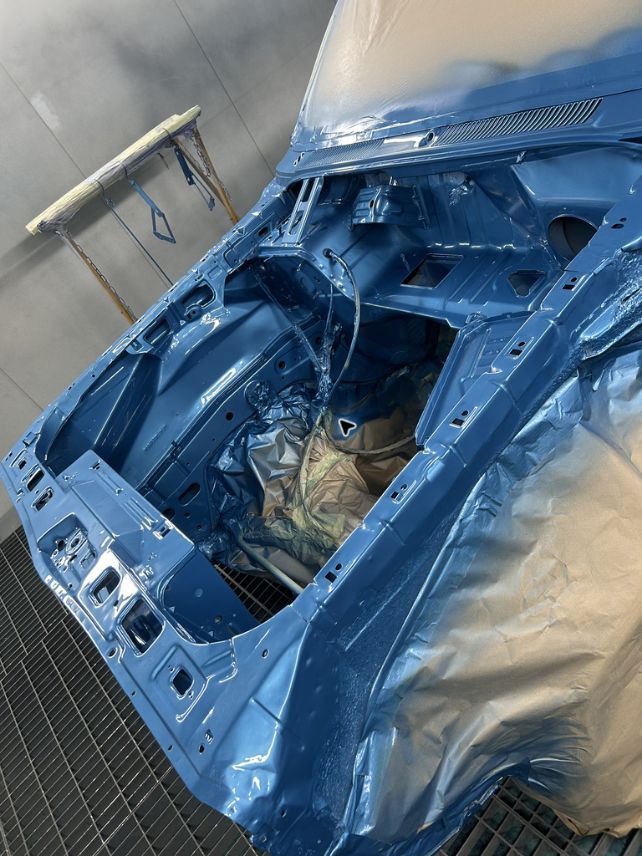
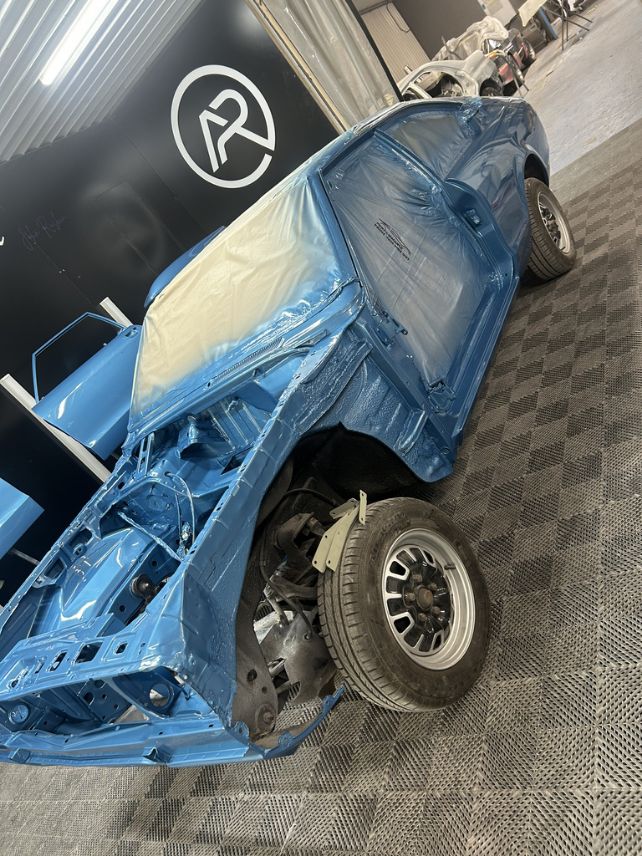
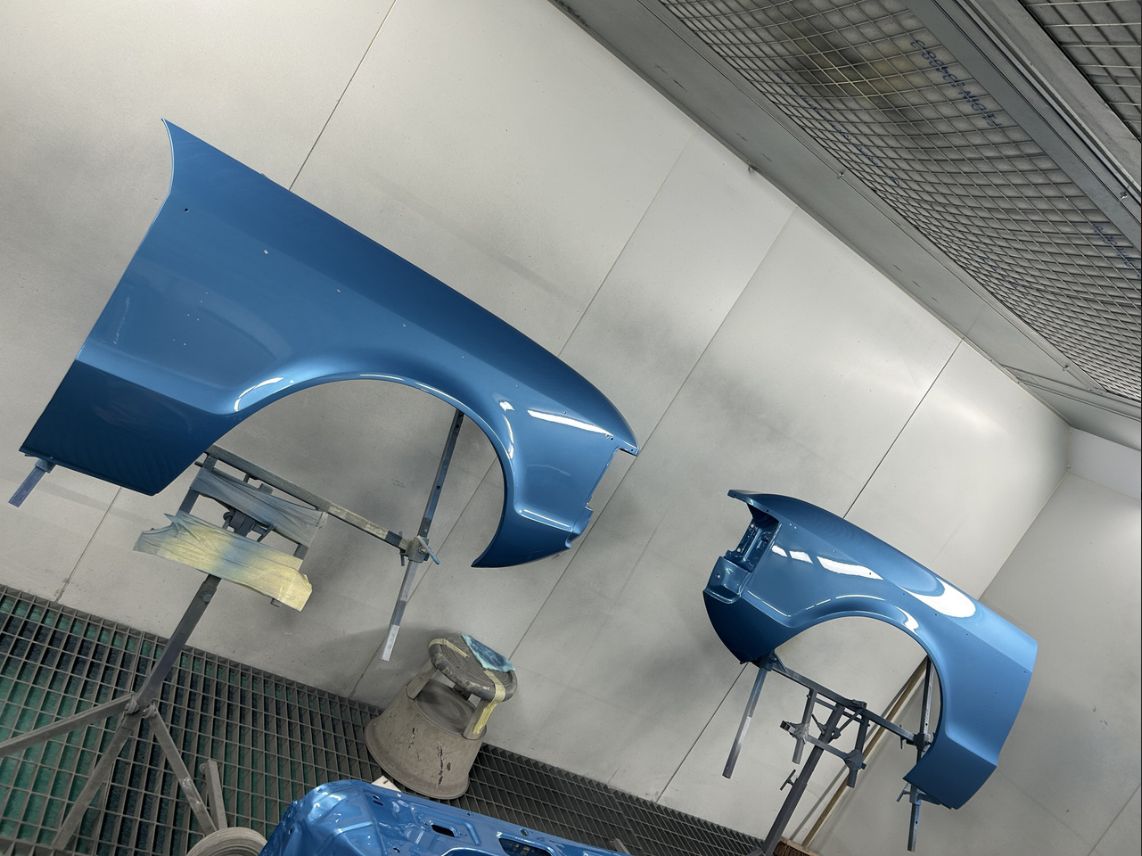
Following repeated guide coating, high-build blocking and refinement through progressively finer grades, the Granada’s shell and panels were ready for colour.
The shell and engine bay were cleaned, loaded and carefully masked in the paint booth. Air quality was checked before spraying, isolator primer was applied where required, and the body then received base coat and clear coat throughout.
This milestone brought the repaired metalwork and months of surface preparation together in one consistent finish. The subsequent wet-blocking and polishing stages would refine clarity, depth and panel-to-panel uniformity before final assembly.

No items found.
Selective restoration complete: final polish and quality-control checks
After paint, the Granada moved through a detailed reassembly and recommissioning programme. Restored brightwork and interior trim were refitted alongside the engine, fuel tank, cooling system, brakes, steering, lighting and cabin components. Electrical faults were traced through the loom and fuse box rather than bypassed, while braking, engine and fluid systems were tested and rectified as required.
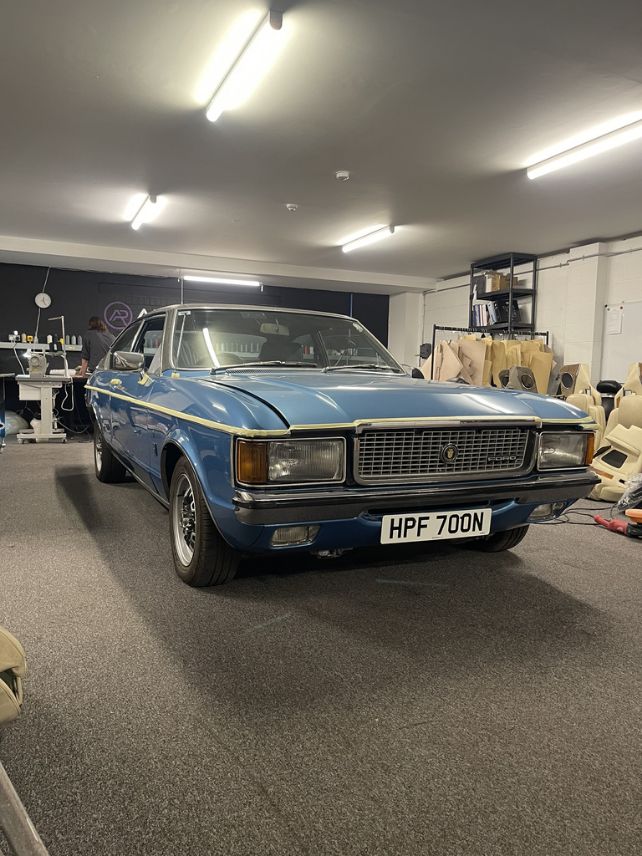
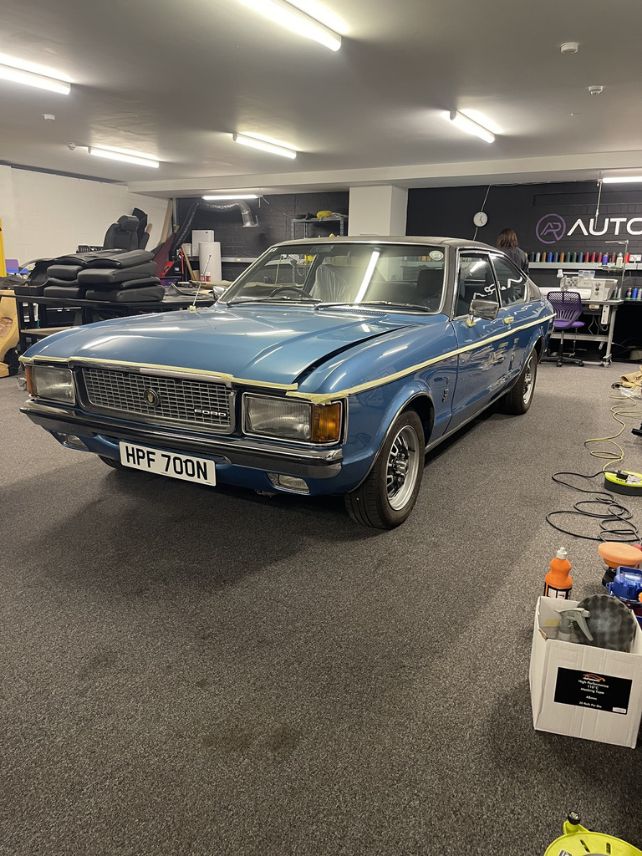
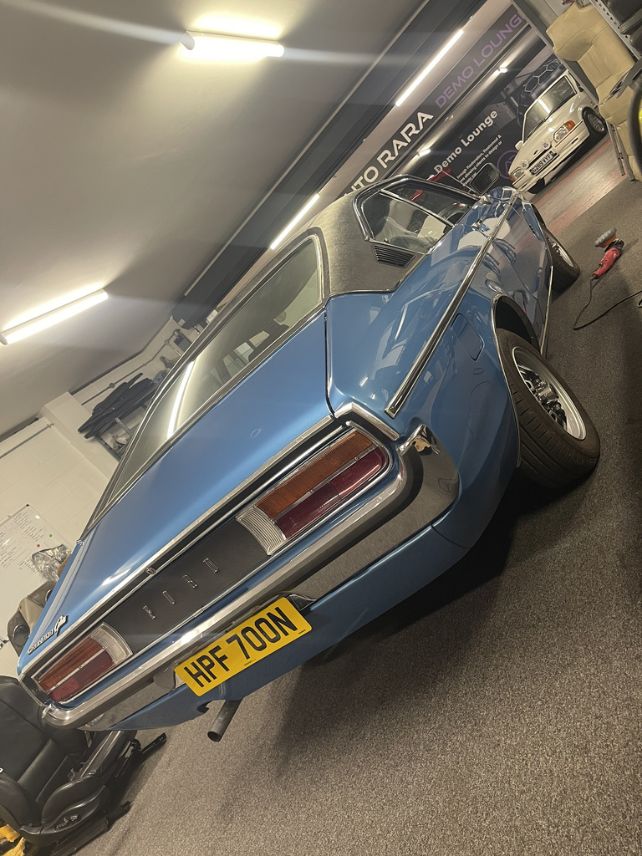
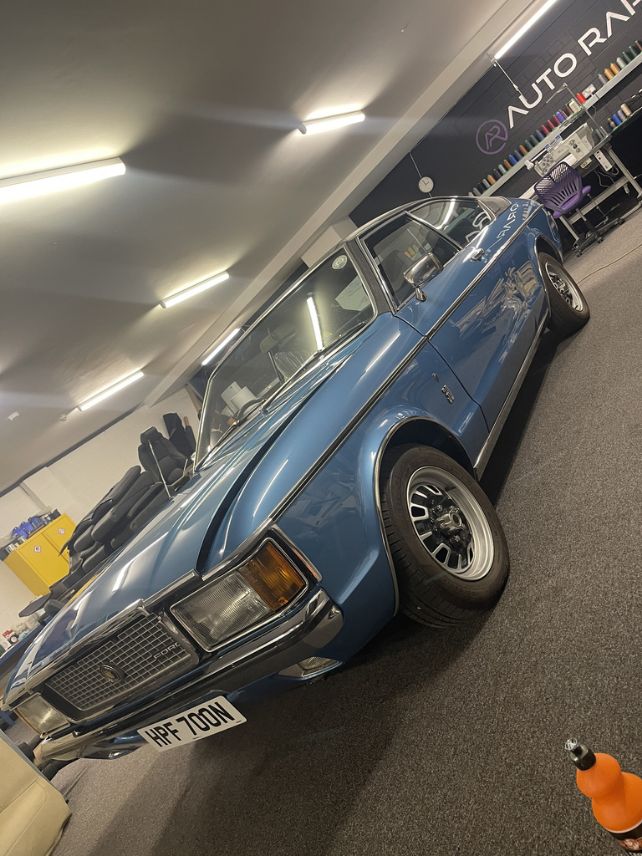
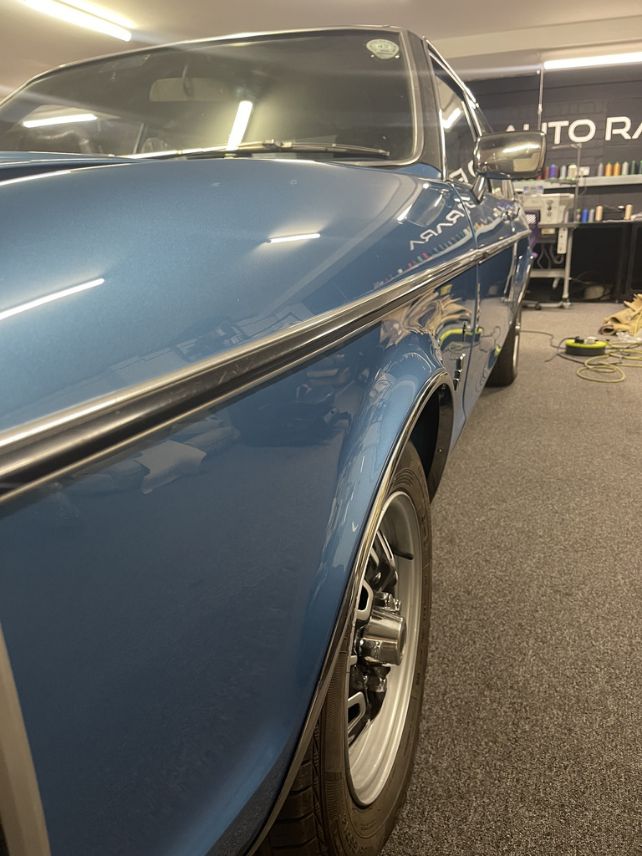
The bodywork then received its concluding polish, bringing out the depth and consistency of the blue finish. A final underside inspection confirmed that the brake and fuel lines remained in serviceable condition and identified no major structural or mechanical concerns; minor age-related observations were documented for ongoing monitoring.
This completed a carefully defined Selective Restoration: the Granada’s identity and usable original fabric were preserved, while the areas affecting structure, presentation, reliability and confident use were restored to an agreed standard.
No items found.


