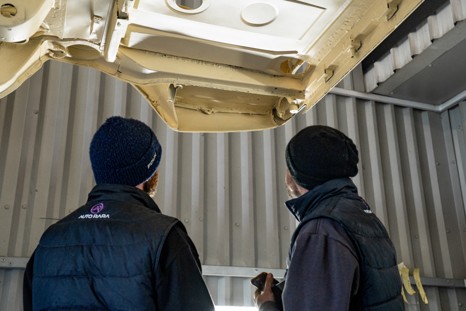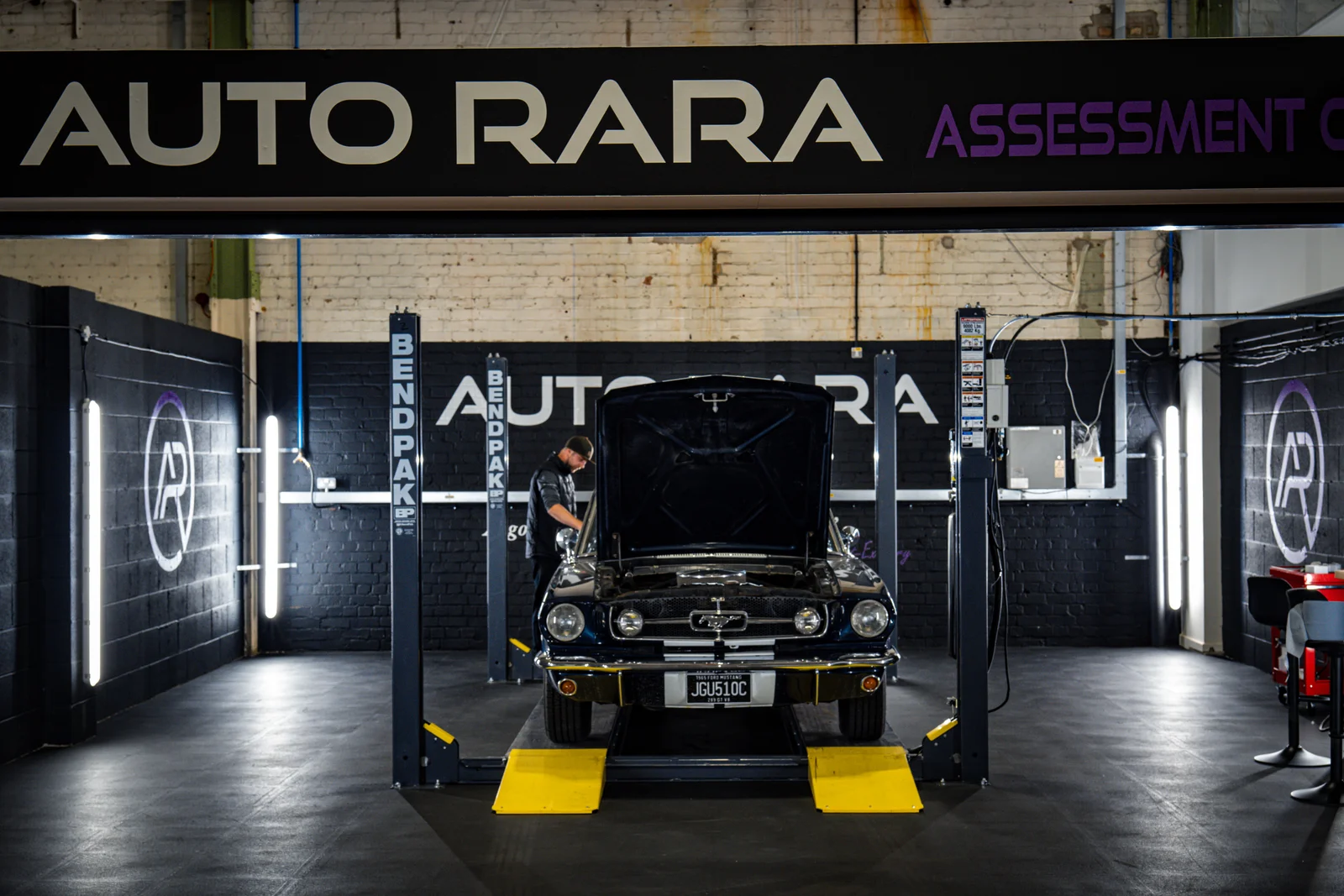
By Auto RARA. Main photograph: A Ford Mustang in Auto RARA’s assessment area.
A restoration brief often starts with something visible: tired paint, an untidy interior or a car that no longer feels as it should. But a description of the desired finish is not yet a scope of work.
Before deciding how far to go, establish what you want the car to do, what is worth retaining and what the available evidence can actually tell you. Those decisions give the workshop a useful brief—and give you a better basis for judging its recommendations.
Here are five questions to work through before agreeing a programme.
1. What do you want ownership to feel like afterwards?
Start with use, rather than a list of parts. Will the car be used for relaxed local journeys, longer trips or as part of a collection? Is your priority preserving its familiar character, addressing specific problems or returning it to a particular specification?
Write that aim in a short paragraph. Then separate essential outcomes from preferences. An original feature that matters deeply to one owner may be something another owner wants to change; the workshop needs to understand that difference before it proposes work.
Bring the history you have, including previous invoices, photographs and notes about alterations. Record what is known and what is uncertain. A missing piece of history is a question to investigate, not a space to fill with assumptions.
At Auto RARA, the Classic Car Assessment combines inspection, research into the car’s context and discussion of the owner’s intended use. The recommendation follows that understanding rather than assuming every car needs the same programme.
2. What should be preserved—and why?
“Restore everything” can sound decisive, but it leaves an important question unanswered: what should remain?
Ask the workshop to distinguish between sound material worth retaining and areas where intervention is supported by the findings. That discussion might concern the character of the interior, an original component or the extent of bodywork. The right answer needs to relate to the particular car, not a universal rule that older is always better or newer is always preferable.
Auto RARA’s 1974 Ford Granada Coupé project provides a useful example. Its published record describes a selective restoration intended to preserve the car’s character while addressing corrosion, previous repairs and mechanical and electrical issues. Sound original material was retained where viable; compromised areas received repair work.
The point is not that your car should follow the Granada’s specification. It is that retention can be an explicit part of the brief, alongside replacement and refurbishment.
3. What is known now, and what still needs investigation?
An early assessment and a later strip-down answer different questions. Auto RARA describes its initial assessment as non-invasive; its restoration process separately includes strip-down and investigation to establish the working programme.

Ask for that distinction to remain visible in the proposal. Which findings have been observed? Which concerns are still provisional? What further access or investigation would be needed to resolve them?
The Granada’s public Build Diary makes the distinction tangible. A mechanical assessment recorded findings in November 2024. A later structural entry explains that stripping exposed previous repairs and corrosion beneath filler. These are different stages of evidence, not interchangeable descriptions of the same inspection.
A useful scope should acknowledge unresolved questions without pretending they have already been answered. Ask how a discovery will be recorded, who will explain its implications and when you will be asked to decide what happens next.
4. Which restoration route fits the evidence?
A programme name should summarise the work, not decide it in advance.
Auto RARA distinguishes selective restoration, full restoration and collector commissions on its restoration page. Selective work addresses defined needs while retaining sound or historically significant material elsewhere. Full restoration considers the car as a complete system through a coordinated programme. A collector commission adds a particular emphasis on authenticity, presentation and provenance.
These are different briefs, not a ladder every owner should climb. Ask the workshop to explain why its proposed approach is proportionate to your car and objectives.
It may also be sensible to discuss staged work, a more focused intervention or leaving appropriate areas alone. The assessment service explicitly allows for different next steps; commissioning the largest programme is not its automatic outcome.
5. What record will support your decisions?
Agree how you will understand progress before work begins. Photographs are useful, but their value increases when they are connected to the finding, the decision and the action taken.
For each significant stage, you should be able to ask: what was discovered, what was done and what remains to be decided? Keep those questions distinct from a demand for constant activity. A clear explanation of a dependency can be more useful than a photograph without context.
Auto RARA’s published process uses photographic Build Diaries and technician reports during a restoration, with a Build Book recording the completed programme. Its assessment page also identifies the opening diary entry as the place for key findings and decisions.
A detailed build record documents the car’s condition, the work completed and the reasoning behind it. This gives you—and a future custodian—clearer evidence of the restoration’s quality and a stronger basis for assessing the car’s value.
Bring a brief, not a predetermined answer
Before your first detailed discussion, make five short notes:
- How you want to use and enjoy the car.
- What matters to you about its existing character and specification.
- The history you can evidence, and the gaps you cannot.
- The concerns you want investigated.
- The decisions and progress information you want explained.
You do not need to diagnose the car yourself. Your role is to explain the outcome you want and ask for recommendations that relate clearly to the evidence.
If you are considering a restoration, explore Auto RARA’s assessment, then contact the team with the car’s details and your priorities.