Auto RARA
Painted bodywork during the Lamborghini Murciélago restoration.
Choosing between selective and full restoration starts with understanding how much of the car needs attention—and how the different areas of work relate to one another. The programme should follow the condition, the material worth retaining and the owner's intended use.
A proposal becomes easier to judge when it explains those choices. You should be able to see why a particular area will be restored, what will remain and how the separate tasks will come together.
Auto RARA's restoration programmes provide three routes. Two documented projects—the Ford Granada Coupé and Lamborghini Murciélago—show how different the resulting scope can be.
Selective restoration: make the boundaries clear
Selective restoration focuses on defined needs while deliberately retaining sound or historically significant material elsewhere. The word “selective” describes the reasoning behind the scope. It does not tell you how many departments will be involved or how demanding an individual repair may be.
The useful questions are specific: which areas require intervention, which can remain, and what evidence supports each decision? A proposal should make the retained areas as understandable as the work being commissioned.
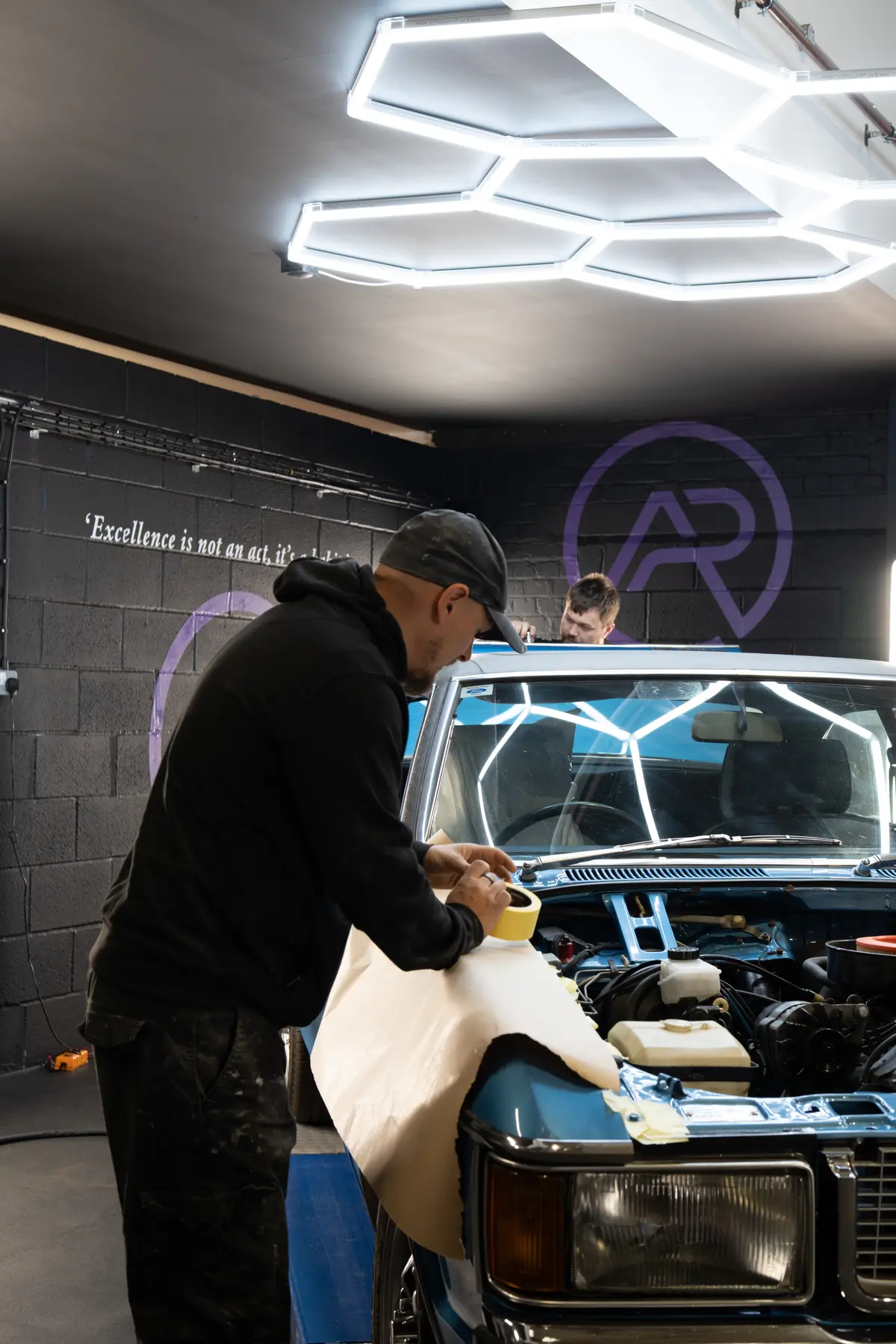
Auto RARA's 1974 Ford Granada Coupé illustrates this approach. Its brief was to preserve the car's character while addressing corrosion, previous repairs and accumulated mechanical and electrical issues.
The structural diary entry dated 7 July 2025 records that stripping revealed earlier repairs and corrosion beneath filler. Sound original material was retained, while compromised areas were cut out and repaired. The later record follows paintwork, reassembly and recommissioning through to completion in July 2026.
That is substantial work within a selective programme. Its defining feature is the deliberate distinction between what needed intervention and what could usefully remain.
For your own car, ask the workshop to explain that distinction area by area. “Selective” should leave you with a clearer understanding of the proposed work.
Full restoration: consider the car as a complete system
A full restoration brings the structure, body, mechanical systems, electrics and trim into a coordinated whole-car programme. The connections between those disciplines become central to the plan.
The 2003 Lamborghini Murciélago project shows the breadth of this approach. Its published account describes a restoration following accident damage, covering the chassis, drivetrain, suspension, braking system, interior and bodywork.
The workshop diary records a chassis assessment on 3 April 2025, followed by engine and gearbox removal on 24 April. The June 2026 summary brings several strands together: structural work, assessment of suspension and braking assemblies, interior repairs and V12 inspection, alongside the shell's progress into paint.
The public project record remains marked in progress. It describes a painted shell with finishing, component work and V12 rebuild preparation still underway. A painted body is an important stage within that wider programme.
For an owner considering full restoration, the proposal should explain how the work is connected. Which tasks provide access for others? What needs to be assessed before components are rebuilt? How will body, mechanical and interior work be brought together for assembly and commissioning?
Full restoration also needs clear decisions about individual components. An overall programme description alone cannot tell you which parts will be retained, repaired, refurbished or replaced.
Compare the reasoning, not just the programme name
The Granada and Murciélago differ in age, design, condition and objectives. They demonstrate different approaches to scope; they are not a like-for-like comparison of cost or duration.
Use the following questions to understand a recommendation for your car:
| Question | What the answer should help you understand |
|---|---|
| What evidence supports the proposed work? | The findings behind each area of intervention. |
| What will be retained, and why? | How the car's existing material and identity are being considered. |
| How do the tasks depend on one another? | Why work is grouped or sequenced in a particular way. |
| What remains uncertain? | Which decisions depend on further access, investigation or assessment. |
| What does completion mean for this brief? | The agreed outcome and how it will be explained and recorded. |
The same questions apply to either route. A selective proposal needs to explain its boundaries; a full-restoration proposal needs to explain the breadth and coordination of the work.
This also makes conversations about estimates more useful. Discuss the actual scope and unresolved findings with the workshop, rather than assuming that two proposals with the same programme name contain the same work.
Where does a Collector Commission fit?
Auto RARA's Collector Commission places particular emphasis on authenticity, presentation, provenance and the vehicle's long-term place in a collection.
That emphasis should be established in the brief. It may change the importance of particular specification choices, the research supporting them and the record accompanying the completed car. Ask which aspects of identity matter to this vehicle and how the proposed programme will address them.
The route should serve a clearly expressed ownership objective. Its name is a starting point for that discussion; the documented scope provides the detail.
Start with an assessment of your car
Auto RARA's Classic Car Assessment brings the car's condition together with its context and the owner's priorities. The initial assessment is non-invasive; later authorised investigation can provide further evidence for the working programme.
Bring the history you have and explain what matters about owning the car. Then ask the workshop to connect its recommendation to the findings, the material worth keeping and the outcome you want.
That connection is what makes a restoration proposal useful: you can understand both the work being recommended and the choices behind it.
Explore the assessment process, or contact Auto RARA to discuss your car.